
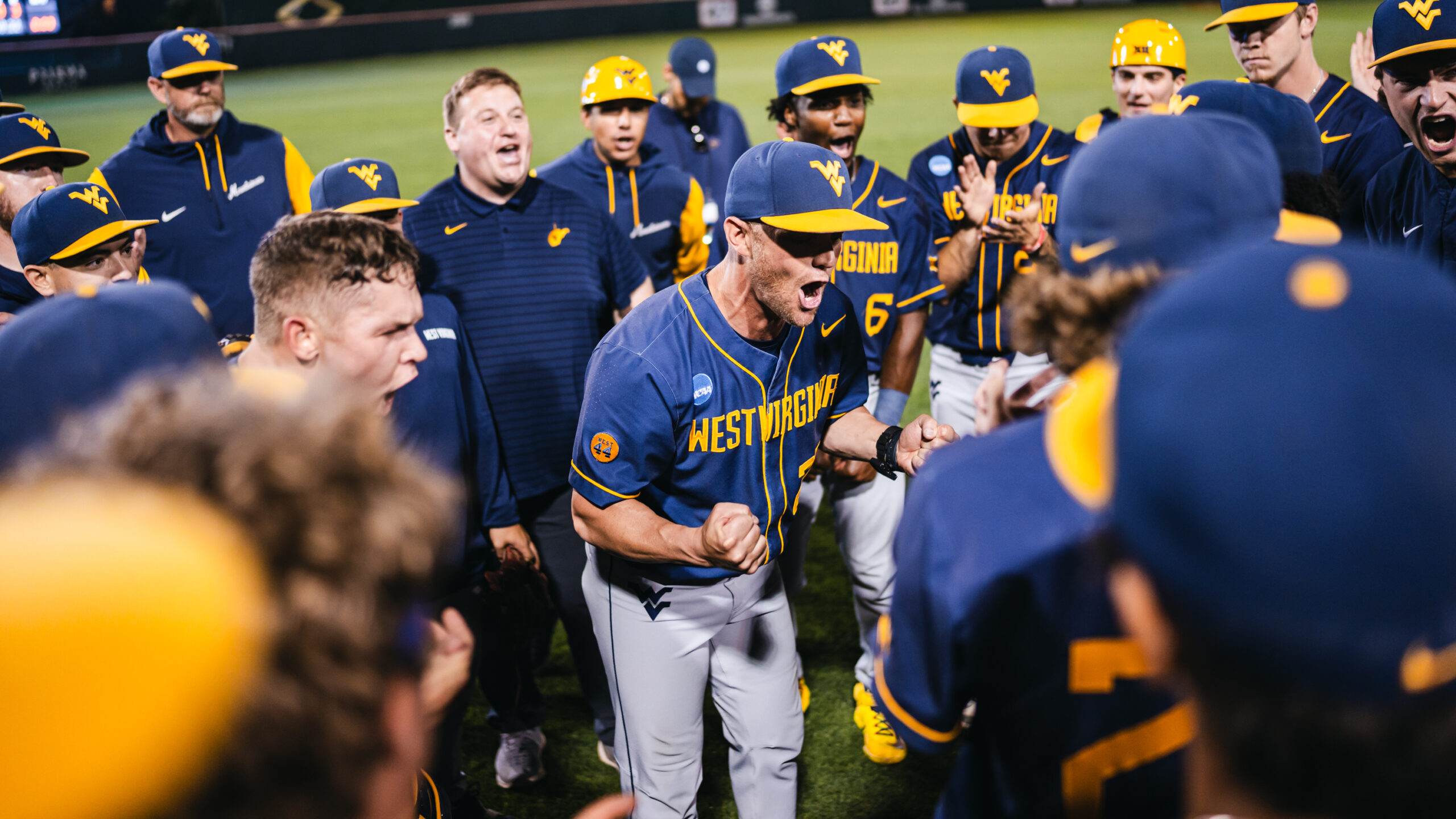
The streets and sidewalks in Morgantown remain coated in snow and ice, but spring is already in the air for WVU Baseball.
The Mountaineers open the 2026 season on February 13 against Georgia Southern, officially launching a new chapter for a program that no longer flies under the radar.
Coach Steve Sabins and his squad enter the season not as an emerging contender – but as the team everyone is chasing. Read more: From hunter to hunted: WVU Baseball begins its Big 12 title defense.
WVU stunned the Big 12 Conference last spring. The Mountaineers piled up 44 wins, surged through conference play and capped the regular season by defeating Kansas to claim the Big 12 regular-season championship. What began as a promising group quickly turned into one of the most consistent teams in college baseball.
Now, the narrative has changed. They are one of the teams to beat.
With expectations rising and postseason goals clearly defined – including a push for a conference tournament title and the opportunity to host a Super Regional series – the Mountaineers face a very different challenge in 2026.
Veteran core
While a full roster breakdown is still ahead, the foundation of this team is already clear.
West Virginia returns a battle-tested pitching staff with frontline experience. Chase Meyer, Reese Bassinger and Carson Estridge give the Mountaineers proven arms capable of anchoring another deep run through the Big 12.
Position-player familiarity remains a strength as well.
Fans will recognize names such as Gavin Kelly (utility), Brodie Kresser (shortstop) and Armani Guzman (utility) – players who bring versatility, athleticism and postseason experience back into the lineup.
That combination of continuity and confidence is exactly why expectations have climbed.
But repeating as conference champions in the Big 12 is never simple.
Related: Can WVU Baseball break the program attendance record in 2026?
Who stands in their way?
Let’s take a closer look at the Big 12 teams most capable of standing between the Mountaineers and another title run.
TCU Horned Frogs: The team to beat
TCU enters the season as the clear favorite to win the Big 12.
The Horned Frogs are the only conference team represented in every major preseason Top 25 poll, giving them the most national momentum heading into opening day. Their combination of returning production, high-end talent and recent postseason consistency makes them the league’s most complete roster on paper.
For West Virginia, TCU represents the measuring stick – the standard every contender must chase.
Arizona Wildcats: Tournament-proven and dangerous
Arizona proved last season it can win when it matters most.
While the Wildcats did not dominate the regular season, they surged in May to capture the Big 12 tournament championship, showing an ability to handle pressure and navigate a postseason format. Arizona appears in one national Top 25 poll entering 2026 – not consensus, but respected.
They may not be the most consistent team in the league, but few Big 12 programs are more dangerous once the calendar flips to late spring.
Kansas Jayhawks: Steady and capable
Kansas remains one of the league’s most consistent threats.
The Jayhawks stayed in the Big 12 race deep into last season and return a roster built to grind through conference play. They may not generate national headlines, but Kansas has proven capable of disrupting championship runs – especially in late April and early May.
A league with no easy weekends
Beyond the top contenders, the Big 12 offers little margin for error.
Series against Kansas State, Arizona State and the league’s middle tier remain dangerous – the kind that can quietly derail championship hopes if focus slips. In a conference this balanced, protecting home series and avoiding damaging road losses becomes just as important as winning marquee matchups.
For West Virginia, the path back to the top is clear – but far from easy.