
Four years removed from my days at West Virginia University, I was back home in Warrenton, Virginia, for one of those fall Saturdays that had become something of a tradition.
My friends and I had spent the day at the 68th running of the International Gold Cup. If you’re from that part of Northern Virginia – horse country, as everyone likes to call it – you know the Gold Cup. Horses, tailgates, gambling and, in our case, probably a few too many adult beverages. Read more: Pat White: The day everything changed
After a tremendous day of spirits and questionable wagering decisions, we stumbled into a local pub. And there on the television was West Virginia getting destroyed by Louisville. The Mountaineers trailed, 24-7. Louisville was ranked and seemingly in control. At that point, watching the rest of the game felt more like an obligation than entertainment.
Then this skinny redshirt freshman from Daphne, Alabama, came into the game.
Pat White.
What happened next changed the course of West Virginia football. And, in a strange way, it changed something for me, too.
A new dawn
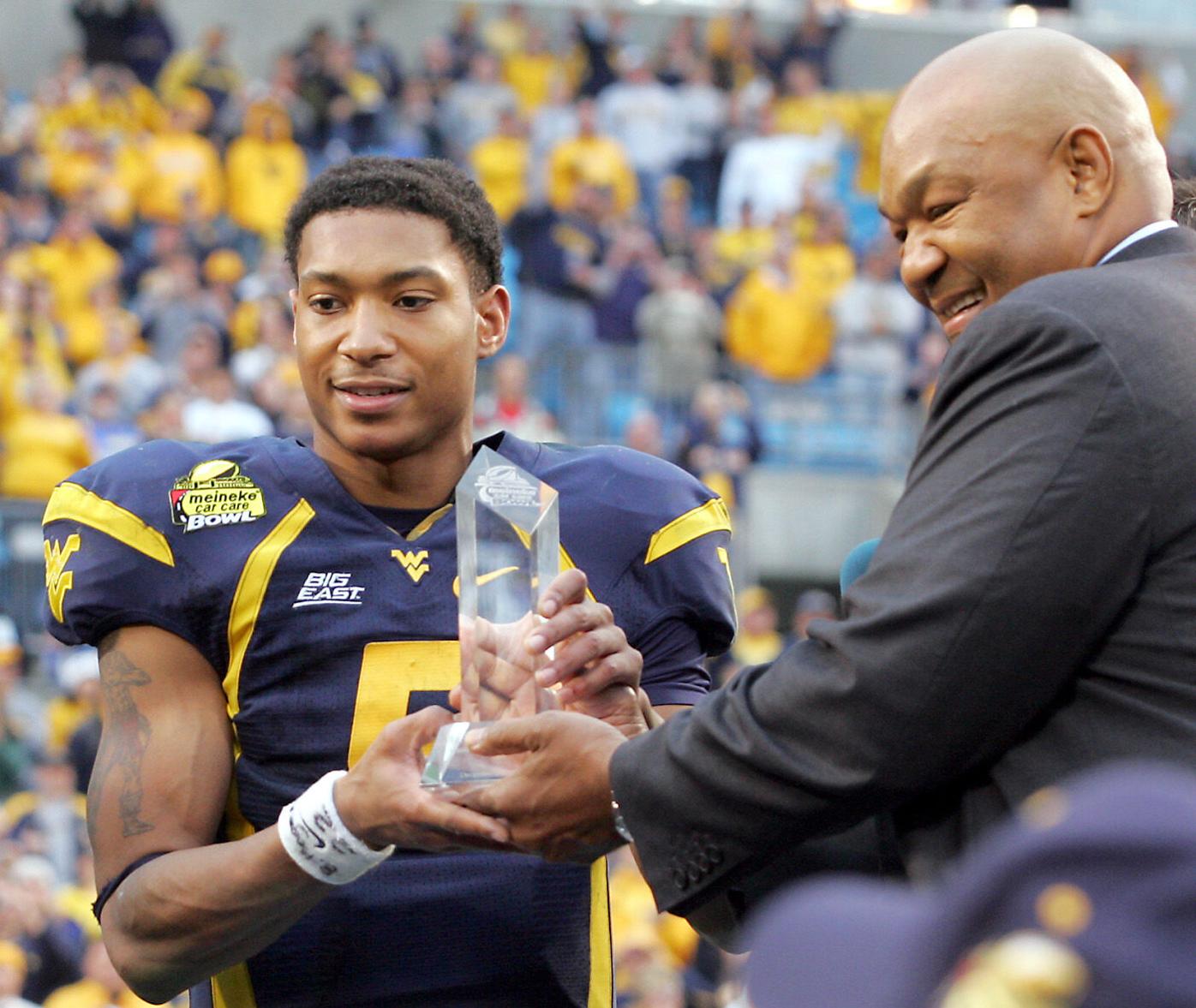
That’s what I keep thinking about as White prepares to have his No. 5 retired at Milan Puskar Stadium on Sept. 5.
Related: WVU to retire quarterback Pat White’s No. 5 in fall
His place in WVU history certainly doesn’t need much explanation. The statistics and records speak for themselves. He remains the only quarterback in college football history to start and win four bowl games.
All of that explains how great White became. But it doesn’t explain what made the story so remarkable.
Because nobody sitting in that Warrenton pub that afternoon knew we were watching the beginning of one of the greatest eras in West Virginia Football history.
There wasn’t even supposed to be a quarterback controversy.
Adam Bednarik was the starter. And he was good. The talented quarterback from Bethlehem, Pennsylvania, was 5-1 as a starter that season, with his only loss coming against No. 3 Virginia Tech. But we had already watched Rich Rodriguez build his offense around Rasheed Marshall. We understood what Rodriguez wanted to do. We just didn’t know what that offense could become with White running it.
Then came Louisville.
Bednarik was injured. White got his opportunity. And suddenly everything looked different.
A 24-7 deficit became a 46-44 triple-overtime victory. White and Steve Slaton weren’t household names when that afternoon began. By the time it ended, the White-Slaton era had arrived. The freshmen were on the scene.
And college football was about to have a problem.
Freshman phenoms
Everyone knew what West Virginia was going to do.
Run the football. And it didn’t matter.
White would ride the football into Slaton’s stomach and force a defender to make a decision. Make the wrong one and Slaton was gone. Make the right one and White might still be gone. And when defenses finally committed everything they had to stopping the run, White could put the ball over their heads.
It was beautiful in its simplicity.
And if that Louisville game was the moment everything changed, the Sugar Bowl was the moment I realized just how far this thing could go.
A few months later, I was there.
Hurricane Katrina had forced the Sugar Bowl out of New Orleans and into the Georgia Dome in Atlanta, which meant West Virginia was essentially walking into Georgia’s backyard to play the SEC champion. Georgia was supposed to be bigger. Faster. More talented.
Then West Virginia jumped out to a 28-0 lead.
I can still remember watching White, Slaton and that offense carve up an SEC defense and almost having to convince myself it was actually happening.
West Virginia won, 38-35.
Having a seat at the table
For someone who had spent his entire life watching the powers of the SEC and the blue bloods of college football seemingly occupy a different level, watching West Virginia beat Georgia – in Atlanta, no less – was surreal. That night put WVU directly into the national spotlight. We weren’t a nice little story from Morgantown anymore. We could play with anybody.
And with White running Rodriguez’s offense, for the first time in my life, I truly believed we could beat anybody.
The Mountaineers weren’t hoping to hang around with the big boys anymore.
We were one of them.
Over the next three seasons, White kept proving it. West Virginia became a fixture in the national rankings. Major bowl games became expectations instead of dreams.
And, of course, White eventually took the Mountaineers to within one victory of playing for a national championship.
I’ll go to my grave believing he deserved far more Heisman Trophy consideration than he ever received.
On September 5, No. 5 will finally take its permanent place in West Virginia history.
There will be statistics explaining why he deserves it. But when I see that number honored, I’ll know it represents something much bigger than wins, yards, or championships.
It represents a time when White made an entire fan base believe WVU could be as good as anyone in the country.

Couldn’t have said it better myself!!!