
It’s not often that someone offers you a quarter of a billion dollars for anything. It’s even less often that it makes sense to turn down that kind of money.
But that’s exactly what Brett Yormark and the Big 12 have apparently done in rejecting Memphis’ attempt to buy its way into the league. And in doing so, the league that’s famously “open for business” made another declaration: that the Big 12 is strong as it is.
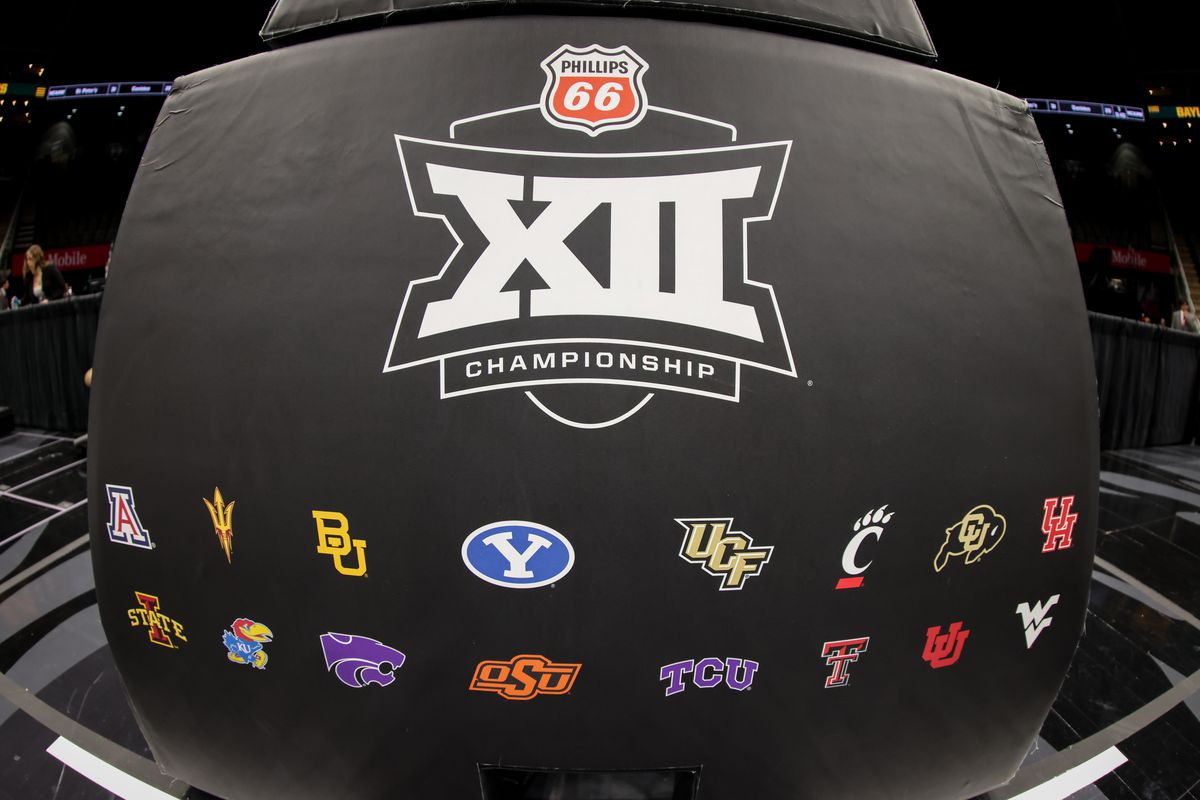
It’s a bold decision on the part of Yormark and the league presidents. It’s also one that makes a lot of sense as a whole. The truth is, even with Memphis’ dollars, it isn’t ready to compete at this level. And by making that statement, Yormark and the Big 12 have made it clear: the league is open for business, but only if the business makes sense for the existing 16 schools.
Read More: How Rejecting Memphis Shows the Big 12 Is Strong
Going Past 16 Makes Scheduling Difficult
The Big 12 is frankly big enough as it is. It’s really hard to schedule once you get past 12 teams, and even more difficult past 16. Once you get into those gigantic numbers, any addition you make has to be done only if there are no downsides.
The Big Ten, for example, didn’t want to go past 16. But when the Pac-12 began to crumble, Washington and Oregon were too valuable to pass up. But that league didn’t want Oregon State or Washington State, because those programs didn’t add the value that the Huskies and Ducks can.
Related: What the Wake Forest Series Says About WVU Men’s Basketball
The same holds for Memphis. The value just isn’t there, especially when the Tigers are asking the Big 12 to go to an odd number. The ACC gets away with this for football because of its odd relationship with Notre Dame and because of SMU’s decision not to play baseball. Because of those two things, the ACC has 18 for most sports, 17 for football and 16 for baseball (Syracuse doesn’t play baseball either). In football, putting one team on a bye week isn’t a problem. That sport demands it because of its physicality.
But basketball and baseball need even numbers to work. For baseball, you need even numbers for weekend series. Same thing holds for basketball; there aren’t enough non-conference options to have someone give up a weekend slot. To break up that nice round number, the value has to be there. And Memphis doesn’t offer it.
Memphis Doesn’t Make the Big 12 Stronger
This might be an odd time to make this comment, considering that West Virginia lost its bowl game to Memphis this past winter. But that wasn’t a good WVU football team, and Neal Brown paid for it with a request to seek other employment opportunities.
The truth is that Memphis doesn’t add enough value right now as a whole. The Tigers are pretty good in football, and they probably could compete in the Big 12. But that’s just a maybe, and the rest of their athletics doesn’t measure up.
Related: WVU Football’s Couch Burning Schedule Ratings
Men’s basketball is a massive underachiever under Penny Hardaway. Memphis has a proud tradition in men’s basketball, but Hardaway has shown himself to be a good recruiter who lacks as a coach. He’s made three NCAA tournaments in seven years, and only once has he made it out of the first round. That’s nowhere near where Memphis should be in the American. The Tigers have the facility and history to be what Gonzaga and Houston have been. They haven’t come close since John Calipari left.
Outside of those two sports, it’s not great. Except for soccer, the school is an absolute wasteland in women’s sports. Basketball went 7-23 last year. Volleyball had a losing record. Softball went 19-36. The baseball Tigers aren’t good either; they went 8-19 in their league and got run-ruled by both Mississippi and Mississippi State. There’s just not enough value for Memphis to make sense right now.
The Big 12 Is Strong and Healthy Without Memphis
The Big 12 divided nearly $500 million among its 16 member schools last year. That doesn’t match up to the SEC or Big Ten, or even the ACC, but it’s still a solid number.
It means the Big 12 can afford to be choosy with who it adds or even if it adds anyone. Consider what the Tigers were putting on the table: a quarter billion in sponsorships, five years without taking a revenue share and giving the Big 12 the right to kick Memphis out of the conference within five years if the league felt the Tigers weren’t pulling their weight.
Related: Best Virginia Defeats Herd That
It’s a completely lopsided offer. And the Big 12 still said thanks, but no thanks because Memphis doesn’t add enough value. That says that this league isn’t going to just take anyone with money, and it isn’t going to add just to add.
The way it approached Gonzaga and Connecticut said as much. Both schools are monsters in men’s basketball, and Connecticut is royalty in the women’s game. In fact, the Huskies offer a healthy athletic department as a whole, with baseball being a regular NCAA tournament participant. But the Big 12 decided the value wasn’t enough to offset the issues. Getting to Spokane and Hartford would have been a tough thing for most of the existing members.
Memphis wasn’t a geographic outlier, but the school’s value was limited to its sponsorship money. And that’s not good enough. Contrast that with the reconstituted Pac-12, which was so desperate that it decided to add Texas State from the Sun Belt. It also tried to add Memphis, but the Tigers rejected that offer.
The Big 12 isn’t desperate. It’s healthy, and it doesn’t have to make a move at all. With 16 solid and stable members, this league looks pretty set for the near future. And given where West Virginia was before it joined the Big 12, that’s a really nice place for the Mountaineers to be.