
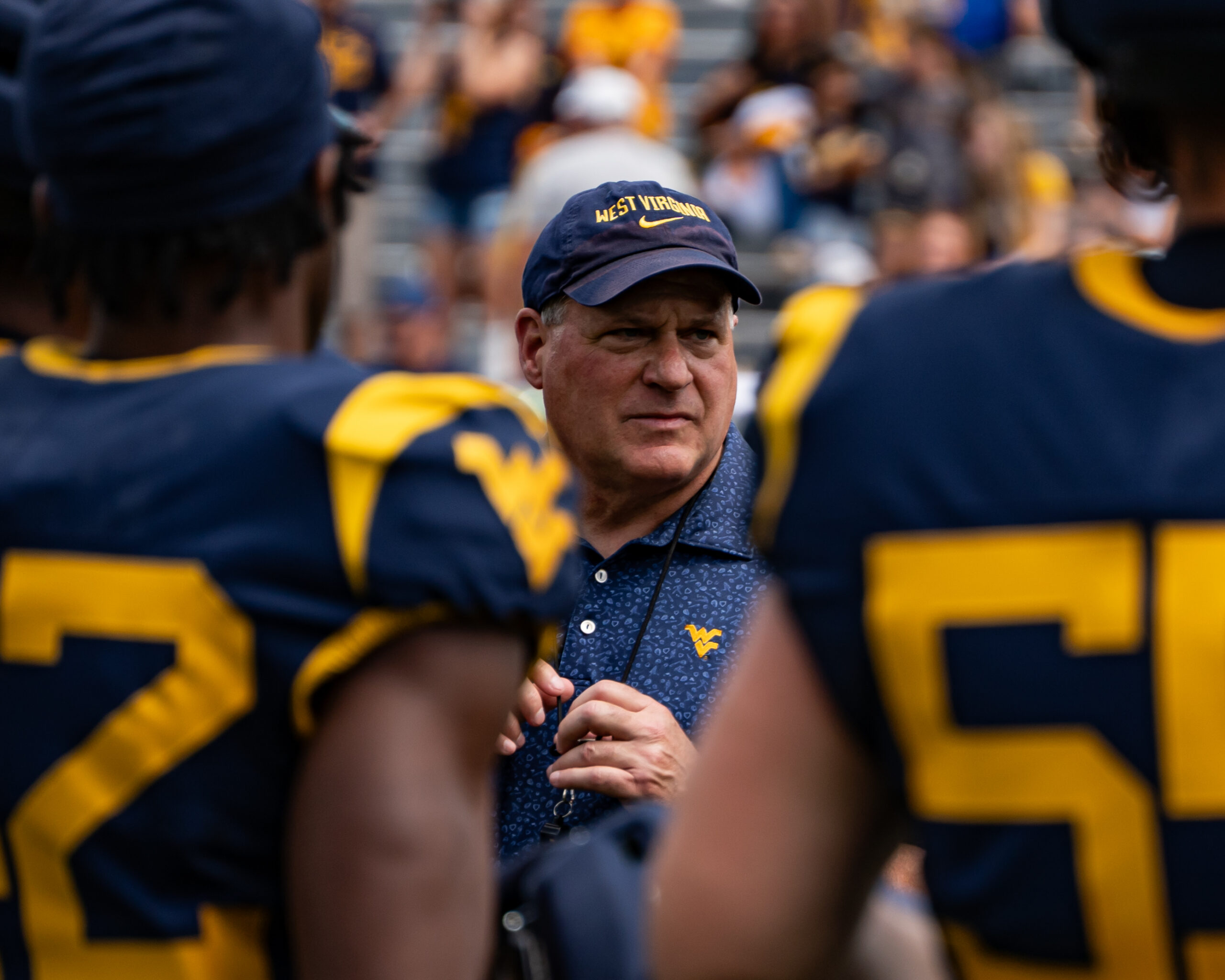
West Virginia has spent the past year building the financial infrastructure necessary to compete in the rapidly changing landscape of college athletics.
Now, WVU Football Head Coach Rich Rodriguez has made clear one of the program’s priorities for using those resources; retaining the players who earn it. Read more: WVU has the resources, but now comes the test of retaining its top players.
During Big 12 Media Days in July, Rodriguez was asked about West Virginia’s NIL capabilities and whether the Mountaineers would be able to keep their top players from leaving for better financial opportunities.
His answer was direct.
“The most important factor to me is retaining the ones who have earned it,” Rodriguez said.
Rodriguez later emphasized that point, saying,
“If they do well, they’re going to get rewarded, and we’re not going to let them leave.”
The comments come as WVU enters the 2026 season with a significantly different financial picture than it had just a few years ago.
A change in financials
WVU Vice President and Director of Athletics Wren Baker said in May that the department’s budget for the current year and next year would exceed $150 million, representing roughly 50% growth from where the department was three years earlier.
Baker also said at the time that the Mountaineer Athletic Club had surpassed 7,000 donors.
That number is still growing.
West Virginia announced August 7 that the Mountaineer Athletic Club had reached more than 7,900 members as part of what the department described as a historic year of fundraising, fan support and strategic partnerships.
Related: WVU Athletics announces 2026 was its most successful fiscal year
The school has also established the Championship Resource Fund, which supports West Virginia’s revenue-sharing model and NIL efforts through Gold & Blue Enterprises.
The increased financial support gives WVU more resources to work with as college athletics moves deeper into the revenue-sharing era.
It does not, however, mean the Mountaineers can match every offer on the market.
Rodriguez acknowledged that reality during Big 12 Media Days, noting that some programs could operate with roster budgets of $40 million or $50 million.
West Virginia does not necessarily have to win every bidding war.
Instead, Rodriguez’s stated priority is making sure the players who develop into important contributors have a reason to remain in Morgantown.
Retention becomes the next test
That philosophy could become particularly important as Rodriguez enters his second season back at West Virginia.
The transfer portal has made roster retention increasingly difficult across college football, with productive players able to explore other opportunities if they believe another program can provide a better financial situation or path forward.
For WVU, the challenge is no longer simply finding the resources to add players. Instead, it is using those resources strategically.
Rodriguez has already made clear that performance will be a major factor in determining which players receive additional support. That puts added importance on how West Virginia handles its roster throughout the season and during the next transfer portal cycle.
A player who emerges as a difference-maker could become a priority to retain. Conversely, WVU will have to determine how much of its available resources it can dedicate to keeping those players while still adding talent from the portal.
Five-for-Five could add another wrinkle
West Virginia could also have another opportunity to add to its roster depending on the outcome of the ongoing “Five-for-Five” litigation.
Rodriguez said Monday that the program is monitoring the class-action effort and has already communicated with a couple of players who could potentially benefit if the litigation is successful.
“If the five-year class action thing goes through, then we may have a couple added,” Rodriguez said.
One potential addition could be former West Virginia defensive back Jordan Scruggs, whose eligibility situation is connected to the litigation.
Rodriguez stressed that there is still uncertainty surrounding the case and said West Virginia does not currently have anyone suing to gain entry into the transfer portal.
Still, the situation gives WVU another potential avenue to improve its roster.
The resources are there, now comes the proof
WVU Athletics has spent the past several years attempting to build the financial foundation needed to compete in an increasingly expensive college sports environment.
Gold & Blue Enterprises has been established to generate new revenue and expand NIL opportunities, while the Championship Resource Fund gives Mountaineer supporters another avenue to contribute to the program’s revenue-sharing and NIL efforts.
Fundraising has grown. The donor base has grown. The athletic department’s budget has grown.
Now, the next question is whether those investments translate to roster stability and, ultimately, success on the field.
Rodriguez has already outlined how he wants to approach that challenge.
The Mountaineers may not be able to outspend every program in the country. But if a player proves he can be a difference-maker in Morgantown, Rodriguez wants West Virginia to have the resources to make staying a viable option.
For WVU, that may be the next measure of whether its changing financial model is working.
The resources are being built.
West Virginia now has to show it can use them to keep the players who matter most.
New: WV Sports Nation Back-to-School Special available now: looking ahead to fall
Stay up to date with WV Sports Nation for more WVU Athletics coverage.
